TutorialsAugust 21, 2025•6 min read
How to Visualize Website Structure from XML Sitemap with jsonviewer.tools
T
Technical SEO Team
SEO & Infrastructure • JSONViewer Engineering
An XML sitemap is the foundational blueprint of your website's search engine crawl budget. However, inspecting a sitemap containing thousands of URLs in a text editor makes it virtually impossible to visualize depth, section clustering, or structural gaps.
01.The Problem with Raw XML Sitemaps
Search engine crawlers rely on XML sitemaps to index canonical URLs, lastmod timestamps, and change frequency. But for engineering and SEO teams, raw XML files with thousands of `<url>` and `<loc>` tags obscure how internal links flow through subdirectories.
By converting your XML sitemap into a directed acyclic graph (DAG), you can immediately see the relative depth of every subdirectory, identify orphaned silos, and optimize crawl depth.
02.Step-by-Step Sitemap Visualization Guide
Here is how you can render an interactive tree of your entire website hierarchy in seconds:
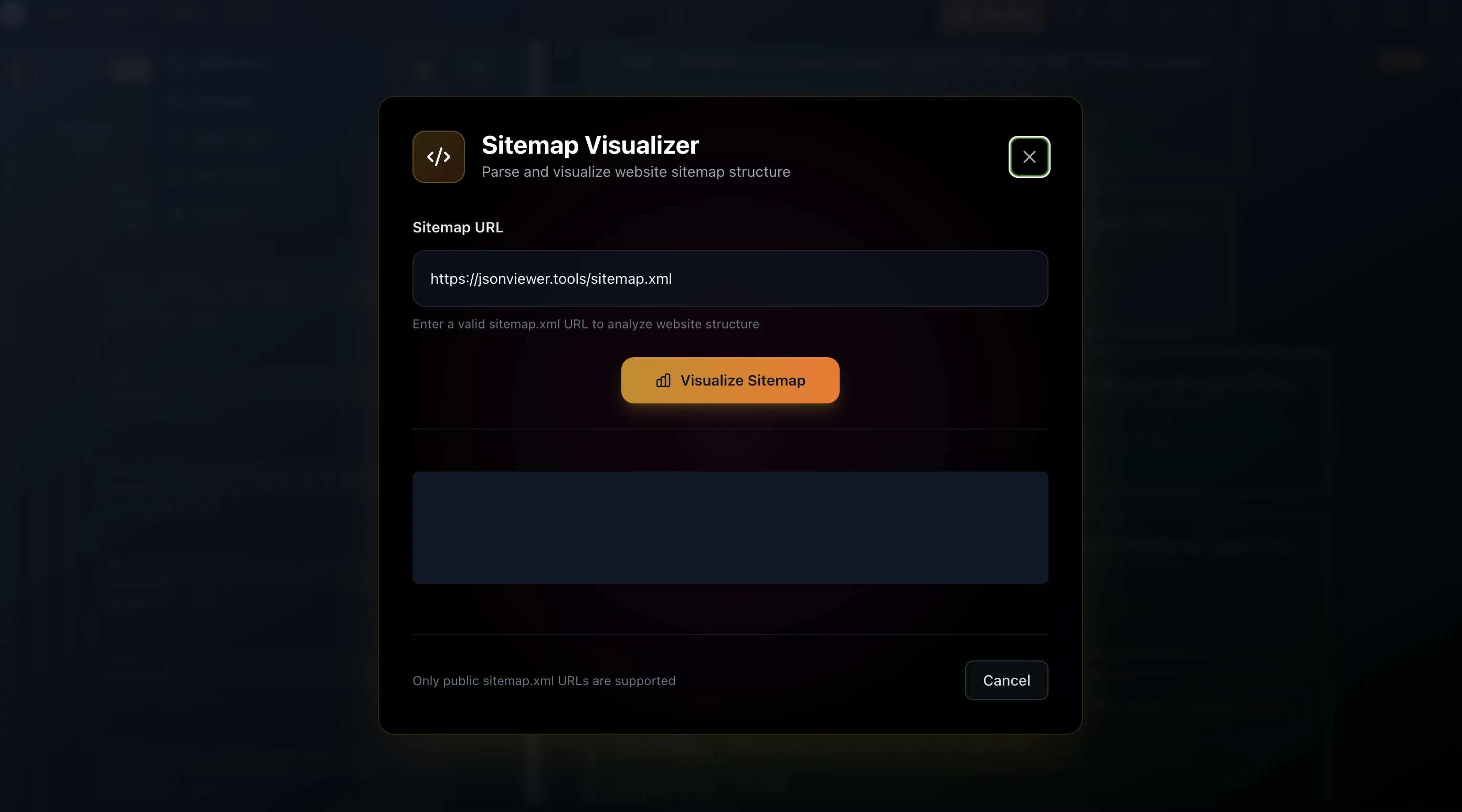
- 1. Copy your sitemap XML link (e.g., https://yourdomain.com/sitemap.xml) or paste the raw XML content into the JSONViewer XML parser.
- 2. Select the 'Sitemap Lens' mode from the visualization toolbar.
- 3. The engine automatically parses the URL paths (e.g. /blog/tutorials/post-1) into hierarchical branch nodes.
- 4. Inspect URL depth levels, cluster density, and last-modified dates visually.
03.Example XML Payload
The XML visualizer supports standard Google XML sitemaps as well as Sitemap Index files containing multiple sub-sitemaps:
XMLSnippet
<?xml version="1.0" encoding="UTF-8"?>
<urlset xmlns="http://www.sitemaps.org/schemas/sitemap/0.9">
  <url>
    <loc>https://jsonviewer.tools/</loc>
    <lastmod>2026-01-15</lastmod>
    <priority>1.0</priority>
  </url>
  <url>
    <loc>https://jsonviewer.tools/features</loc>
    <lastmod>2026-01-20</lastmod>
    <priority>0.8</priority>
  </url>
</urlset>
Try JSON Viewer Studio
Ready to visualize your payloads in real time?
Zero setup, no credit card, 100% in-browser client privacy.